Activation Mapping: How It Works & How It Can Go Wrong, with Joshua M. Cooper, MD
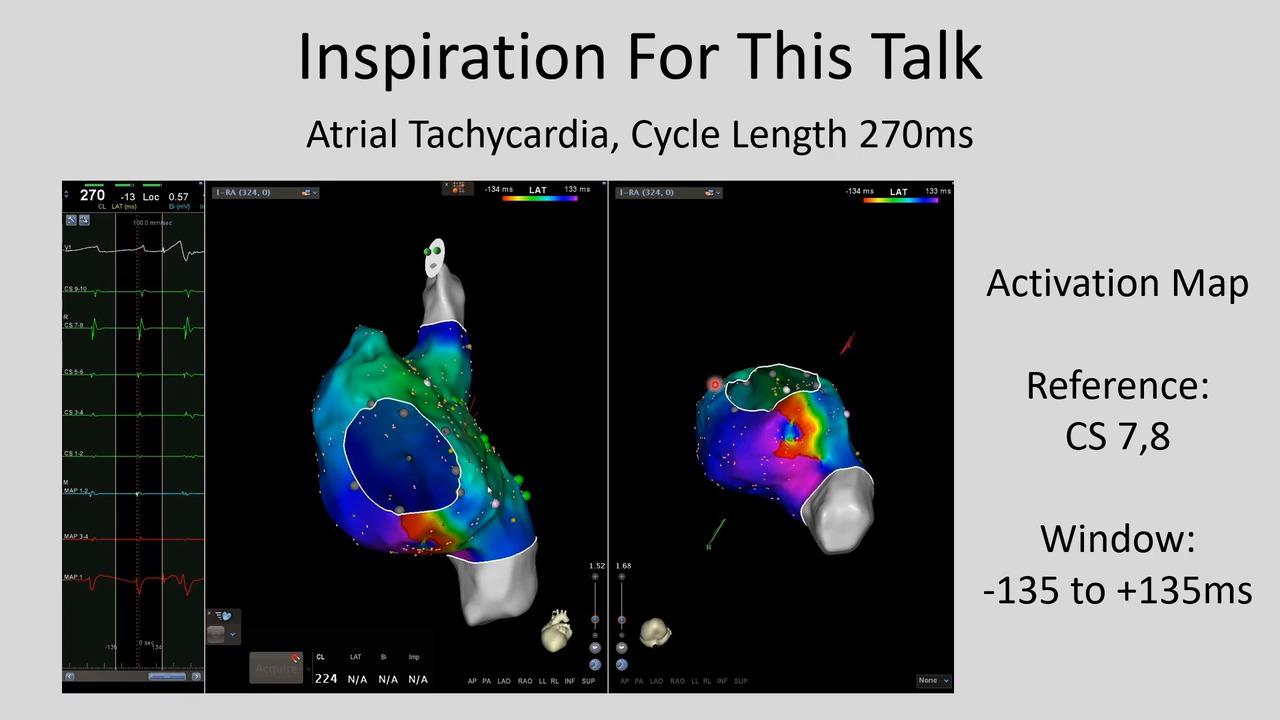
Watch this 21-part video playlist to learn more as Dr. Cooper presents on activation mapping, selecting an activation point, selecting a reference point, mapping the atrium, and case examples. This content is intended for Health care professionals in New Zealand. Content in videos is intended to provide procedural educational insight and is the opinion of the presenter or author. Johnson & Johnson Medical do not endorse the use or promotion of unapproved products or indications. unapproved products or indications.
Unit 1
Part 1: Introduction, with Josh Cooper, MD
Part 2: Overview, with Josh Cooper, MD
Part 3: Reference Point Selection, with Josh Cooper, MD
Part 4: Activation Mapping in the Atrium, with Josh Cooper, MD
Part 5: Annotation, with Josh Cooper, MD
Part 6: Case Example 1, with Josh Cooper, MD
Part 7: Case Example 2, with Josh Cooper, MD
Part 8: Case Example 3, with Josh Cooper, MD
Part 9: Case Example 4, with Josh Cooper, MD
Part 10: Single Wrong Data Point, with Josh Cooper, MD
Unit 2
Part 11: Mapping System EGM Display, with Josh Cooper, MD
Part 12: WOI and Focal Tachycardia Example, with Josh Cooper, MD
Part 13: Atrial Flutter and the Arbitrary WOI, with Josh Cooper, MD
Part 14: Focal Tach and Slow Conduction Impact on WOI, with Josh Cooper, MD
Part 15: AT#1 Revisited with Slowing of Conduction, with Josh Cooper, MD
Part 16: Focal Tach with Very Slow Conduction, with Josh Cooper, MD
Part 17: Substrate Model in Tachycardia with Very Slow Conduction, with Josh Cooper, MD
Part 18: Shifting the WOI When Conduction Velocity is Very Slow, with Josh Cooper, MD
Part 19: Pitfalls Leading to Erroneous Maps, with Josh Cooper, MD
Part 20: How to Create a More Useful WOI, with Josh Cooper, MD
Part 21: Take Home Points, with Josh Cooper, MD